When “Could” Becomes “Fact”
How political narratives quietly turn speculation into certainty—and why that matters for democracy

It started with a word in a Facebook post by someone I have known for years back home in Wisconsin, and given that I live and pay taxes in Virginia, it caught my eye.
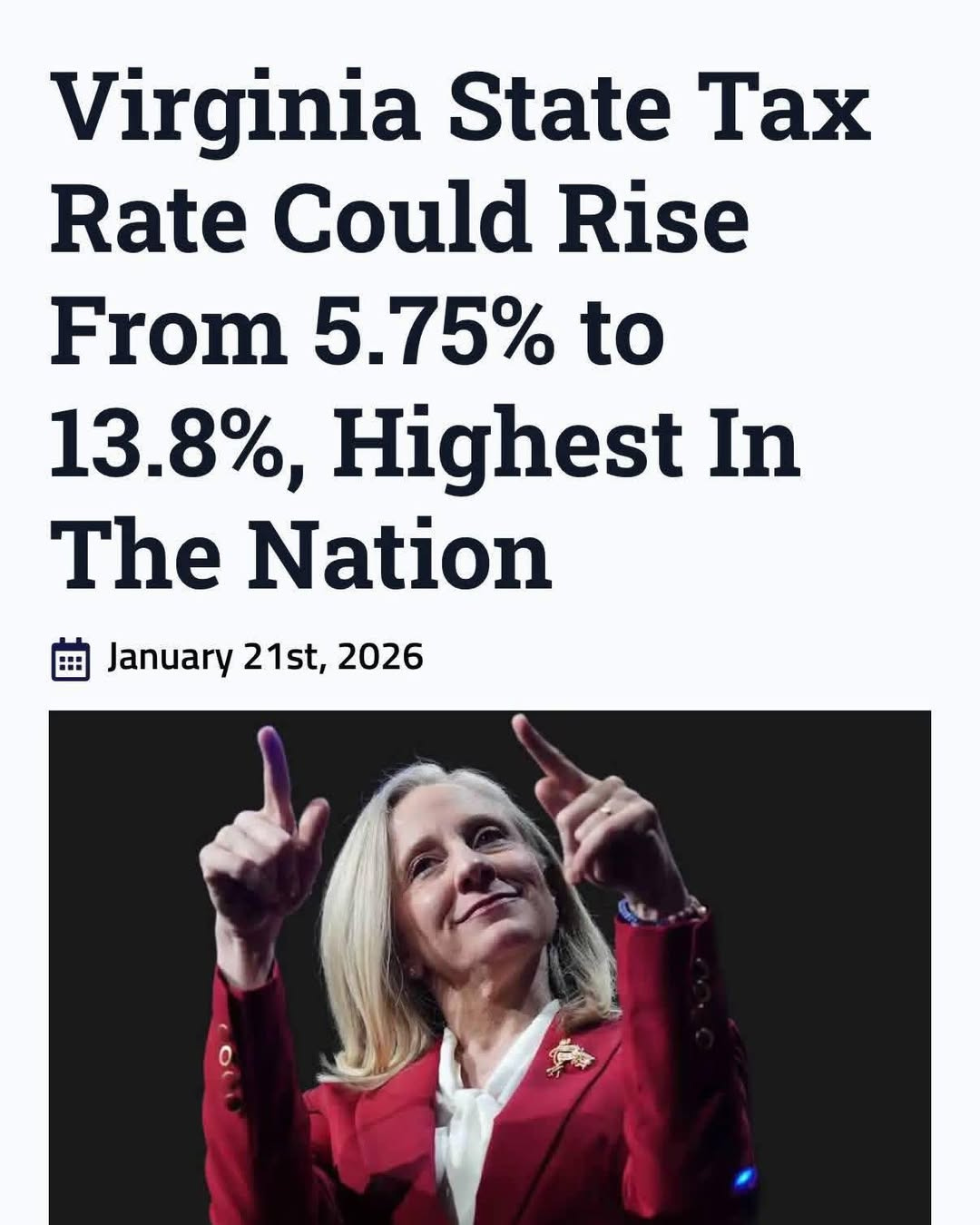
Now the word “could” is doing a lot of work in that headline.
In plain English, “could” means possibility, not certainty.
It signals speculation.
It tells the reader: this might happen under certain circumstances.
So I asked a simple question.
What policy would produce that outcome?
The conversation that followed was revealing.
Instead of discussing the policy itself, the discussion shifted to defending the word “could.”
“You’re claiming a ‘could’ statement is a fact. It isn’t.”
And in that moment, the entire conversation changed.
We weren’t talking about the claim anymore.
We were talking about the grammar.
The number was still circulating.
The narrative was still spreading.
But the conversation had shifted to something else entirely.
And it perfectly captured one of the most common political tactics of our time:
the quiet transformation of possibility into certainty.
The Four Steps of Narrative Conversion
Once you recognize this pattern, you start seeing it everywhere.
Political narratives today often follow a predictable sequence.
Step One: The Hypothetical
The story begins with a hypothetical.
Not something happening now.
Not something proposed.
Not even something likely.
Just something that could happen under the most extreme interpretation of a policy idea.
Hypotheticals are powerful because they require no evidence to begin circulating.
All you need is imagination.
Step Two: Emotional Framing
Next comes emotional priming.
In this case, the key phrase was:
“Highest in the Nation.”
That phrase isn’t policy analysis.
It’s designed to trigger a reaction.
Anger.
Fear.
A sense of threat.
Once the emotional response kicks in, our brains begin doing what humans have always done:
Looking for evidence that confirms the story we already believe.
Step Three: Narrative Conversion
Now something subtle happens.
The word “could” quietly disappears.
Not literally.
But in the way the claim is treated.
People repeat it.
Share it.
Argue about it.
Soon, the hypothetical becomes part of the assumed political landscape.
The speculation has become a fact in the narrative world.
Step Four: The Defensive Loop
This is where the tactic becomes particularly effective.
Because when someone questions the claim, the conversation shifts.
Instead of defending the policy itself, the response retreats to the literal wording.
“I didn’t say it would happen. I said it could happen.”
This maneuver allows the narrative to spread as if it were real, while maintaining deniability about its truth.
And that’s where the psychology becomes important.
The Psychological Trick
If you look closely at exchanges like the one I described above, you’ll notice something subtle.
The person defending the narrative is often doing two contradictory things at once.
First, they defend the headline itself.
The whole point of sharing it is to create the impression that something serious is about to happen.
In this case, the narrative function of the post is clear:
“Democratic policies will cause your taxes to skyrocket.”
But the moment someone questions the claim, the defense changes.
Instead of defending the policy argument, the conversation retreats to the wording.
“You said ‘could’ is a fact. It isn’t.”
At that point, the discussion is no longer about:
whether the claim is plausible
whether any policy would actually produce it
whether the number itself is misleading
It becomes a semantic debate about the word “could.”
This is a classic rhetorical maneuver.
It works like this:
Step one:
Use a hypothetical to create an emotional political narrative.
Step two:
Let people interpret it as a real threat.
Step three:
When someone questions it, retreat to the literal wording.
“I didn’t say it would happen. I said it could happen.”
So the narrative spreads as certainty, but the person spreading it maintains plausible deniability.
This creates the paradox you see in so many political arguments today.
Someone will say:
“Could isn’t fact.”
But the entire purpose of the post was to encourage people to treat it like one.
Otherwise, the post would have no political value.
Political psychologists call this motivated reasoning.
Authoritarian propagandists call it narrative defense.
Most normal people caught inside partisan information ecosystems simply believe they are defending their team.
Why Authoritarians Love This Trick
I’ve spent more than twenty years working with people fighting dictators.
Belarus.
Russia.
Ukraine.
Georgia.
One thing you learn quickly in those environments is that authoritarian movements don’t depend on convincing everyone of a lie.
They depend on something simpler.
They just need enough people arguing about narratives instead of examining reality.
Disinformation rarely works by proving something false.
It works by flooding the environment with emotionally powerful hypotheticals until people stop distinguishing between possibility and fact.
Steve Bannon once described the strategy bluntly:
“Flood the zone with shit.”
When narratives become more important than truth, politics stops being about solving problems.
It becomes about protecting identity.
That’s where extremism begins to grow.
The Cost of Narrative Thinking
When communities fall into this pattern, three things happen.
1. People stop asking questions
Curiosity becomes dangerous.
Instead of exploring ideas, people defend them.
2. Conversations become circular
Arguments stop moving toward understanding.
They move toward protecting the narrative.
3. Extremism gains ground
Because narratives are far easier to weaponize than reality.
Reality is complicated.
Narratives are simple.
And simple stories spread faster than complicated truths.
The Irony
One of the great ironies of this moment is that skepticism about exaggerated claims was once a conservative instinct.
Question the narrative.
Look at the evidence.
Don’t panic over speculation.
Those habits weren’t liberal or conservative.
They were simply intellectually honest.
And intellectual honesty is the oxygen democracy breathes.
Three Things You Can Do Right Now
The good news is that once you recognize this tactic, it becomes much easier to disrupt it.
1. Slow Down the Narrative
Ask three questions:
Is this happening now?
Is this a likely policy outcome?
Or is it something that could happen under extreme assumptions?
If it’s the third one, treat it as a hypothetical—not a fact.
2. Ask Better Questions
Simple questions disrupt the narrative loop.
Try asking:
“What policy would produce that?”
“How likely is that outcome?”
“Where does that number come from?”
You don’t have to argue.
Just ask.
Truth has a funny way of showing up when people are willing to look for it.
3. Practice Responding
Most people don’t know how to push back when narratives start spinning.
That’s why we created LSTN2U.us.
It’s a simple project designed based on years of survey research via a pay-it-forward model that doesn’t track, train, or target your data, to help people practice responding calmly and clearly to exactly these tactics.
If you want to help restore healthier conversations:
Sign up.
Practice.
Share it.
Because democracy only works when citizens know how to talk to each other again.
The Bottom Line
Words matter.
Especially small ones.
Because sometimes the distance between truth and distortion is only five letters long.
Could.
And if we stop paying attention to the difference between possibility and reality, we eventually lose something far bigger than an argument.
We lose the ability to share the same world.
And without that, democracy itself becomes impossible.
One of the most important pieces I’ve read in a while! I’ve been spinning since I read that Bondi said we “could” revisit the draft. I have four grandsons that age, with three who belong to my daughter, and I’ve felt very frightened by the possibility. Now that I’ve read your words, I’ve remembered my brain. Thank you.
Everyone has a responsibility to do something to better our future. May I guide you to “a third way” path? Please, join me at http://EthicalGovtNow.org. Only $12 annually (3.3 cents a day). Our Republic is in a much more complicated place than most of us think. We need a longer view of solutions to our inherited societal and political complexities and need to look for them with priorities. CLICK to delve into: http://EthicalGovtNow.org and join, or our grandchildren are very likely to inherit our present.